By Irfan Siddiqi
Islamabad: Deputy Chairman Senate Syedaal Khan Nasar has significantly expanded his parliamentary and public outreach through a series of high level meetings and public engagements, reaffirming his commitment to democratic stability, national unity, socio economic development and youth empowerment. Over the past several days, he has met senior political leaders, parliamentarians, tribal elders, civil society representatives, business leaders, professionals and youth delegations, while also highlighting the importance of sports as a tool for national integration and development.
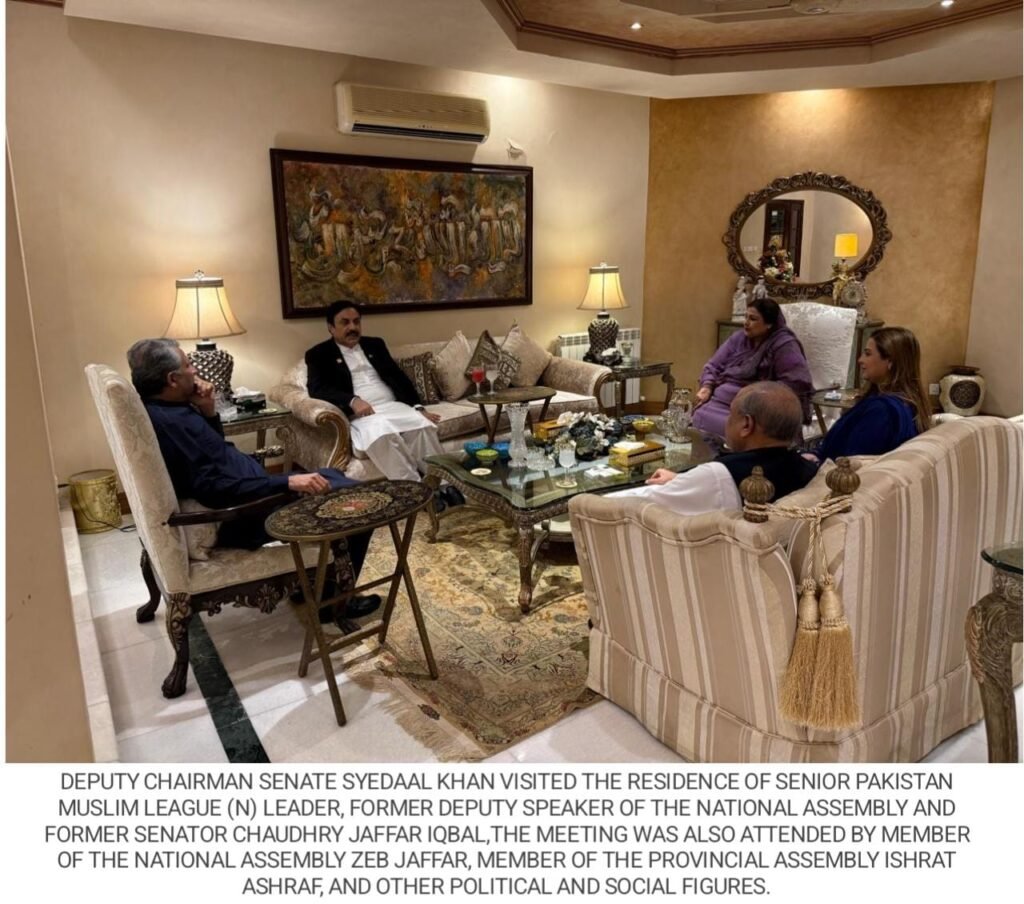
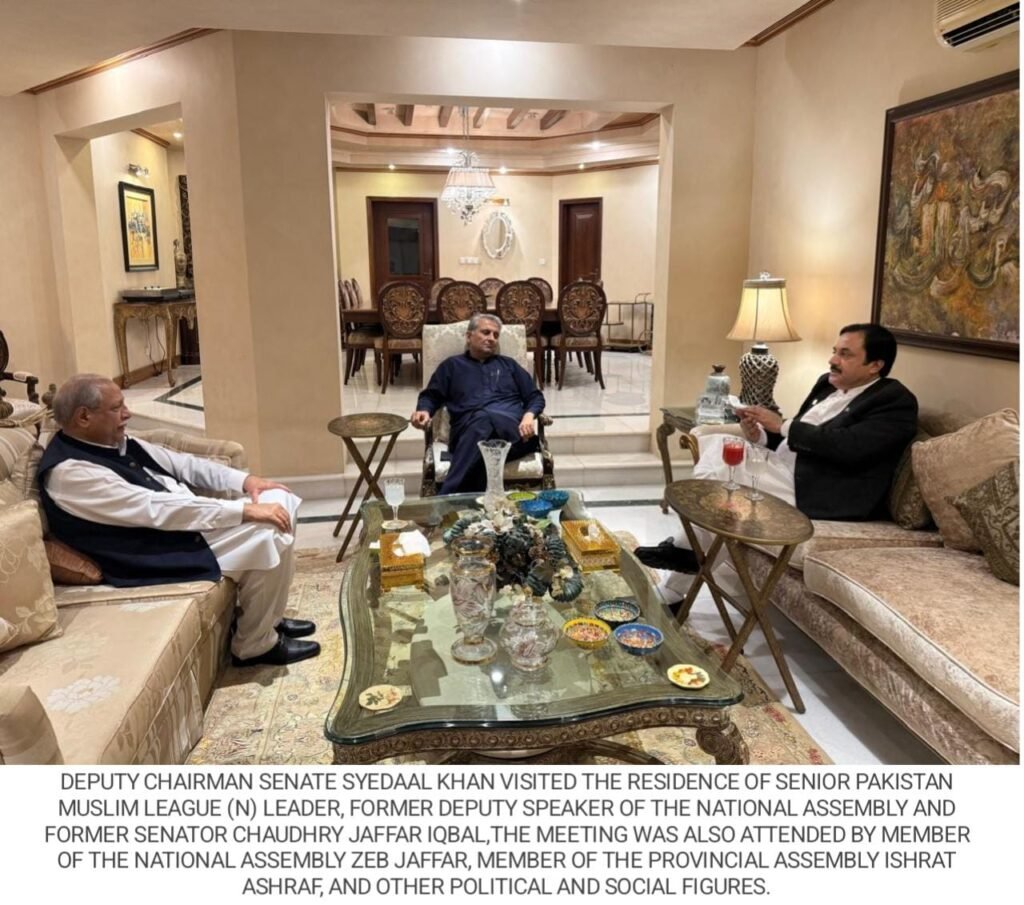
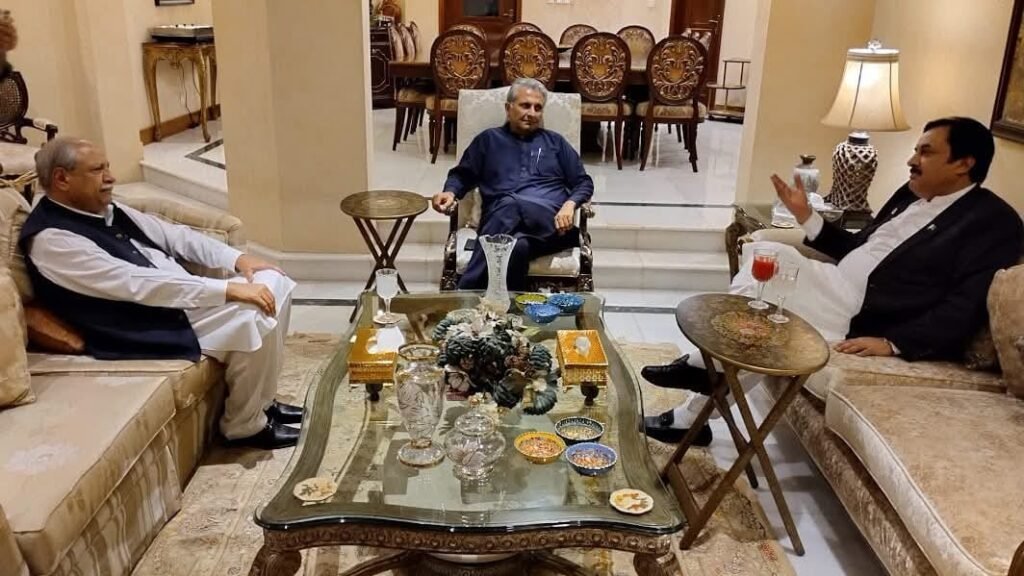
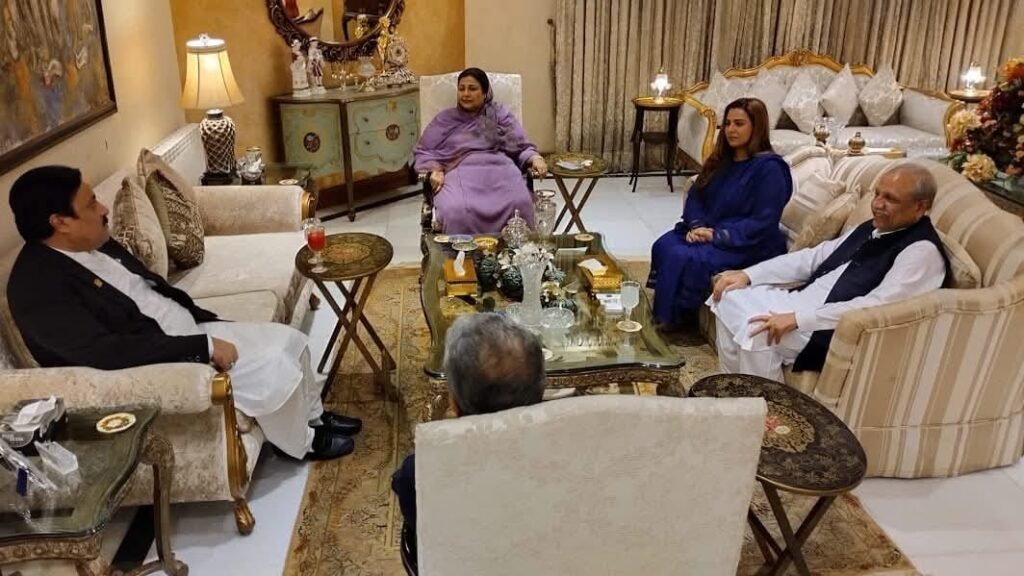
One of the key engagements was his visit to the residence of senior Pakistan Muslim League (N) leader, former Deputy Speaker of the National Assembly and former Senator Chaudhry Jaffar Iqbal. The meeting, attended by Member of the National Assembly Zeb Jaffar, Member of the Provincial Assembly Ishrat Ashraf and other political and social figures, focused on Pakistan’s prevailing political environment, parliamentary affairs, democratic continuity and issues relating to public welfare.
During the meeting, Deputy Chairman Senate Syedaal Khan Nasar paid tribute to Chaudhry Jaffar Iqbal’s distinguished political career, describing experienced political leadership as an invaluable asset for strengthening democratic institutions. Both leaders agreed that continued political consultation, institutional cooperation and national harmony are essential to effectively address the country’s challenges and safeguard democratic values.
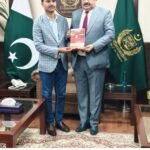
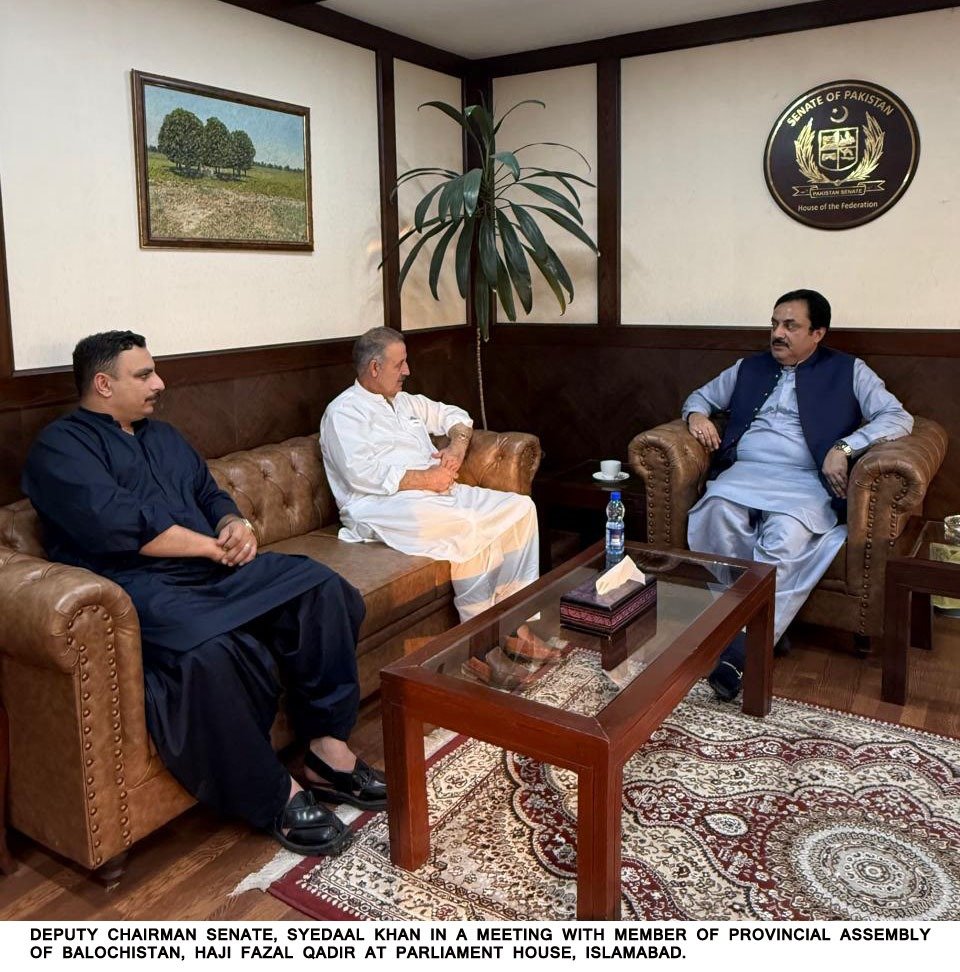
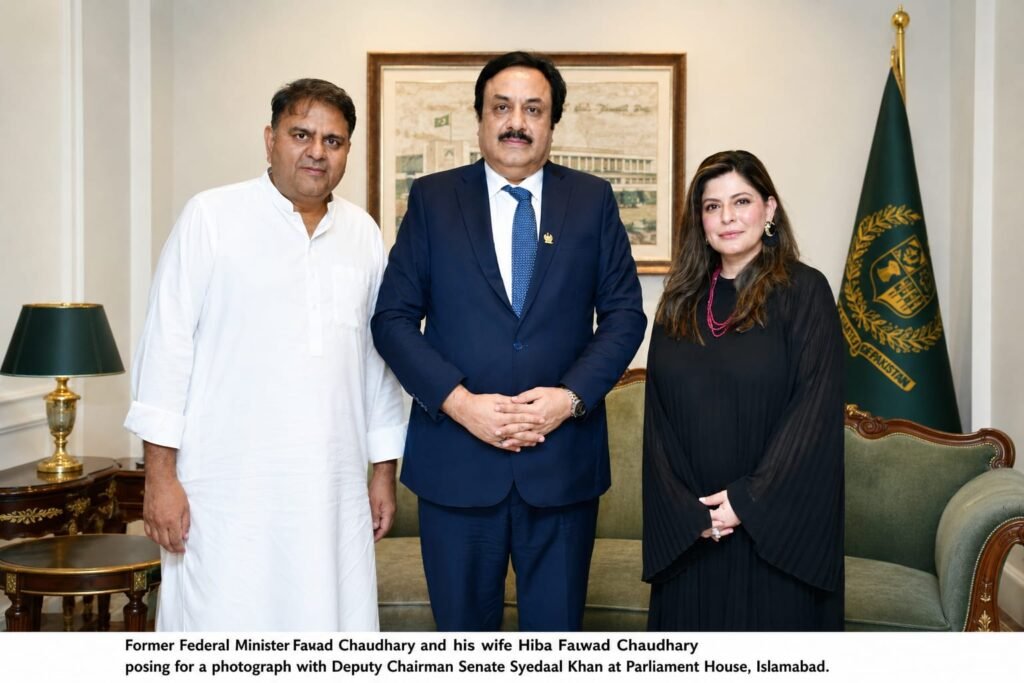
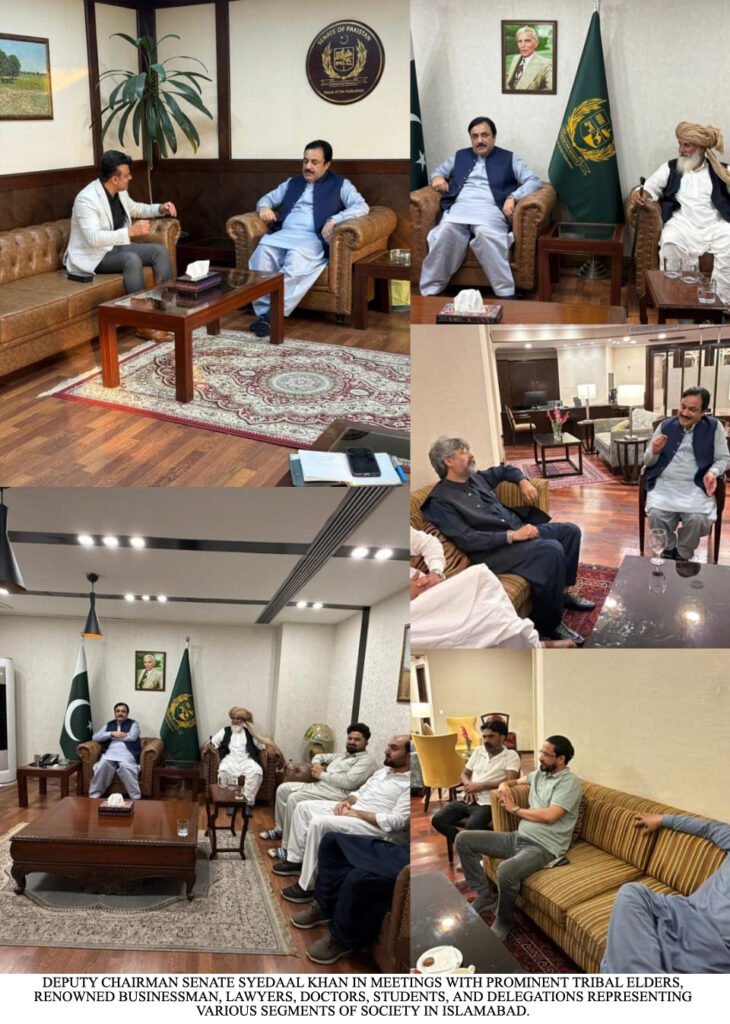
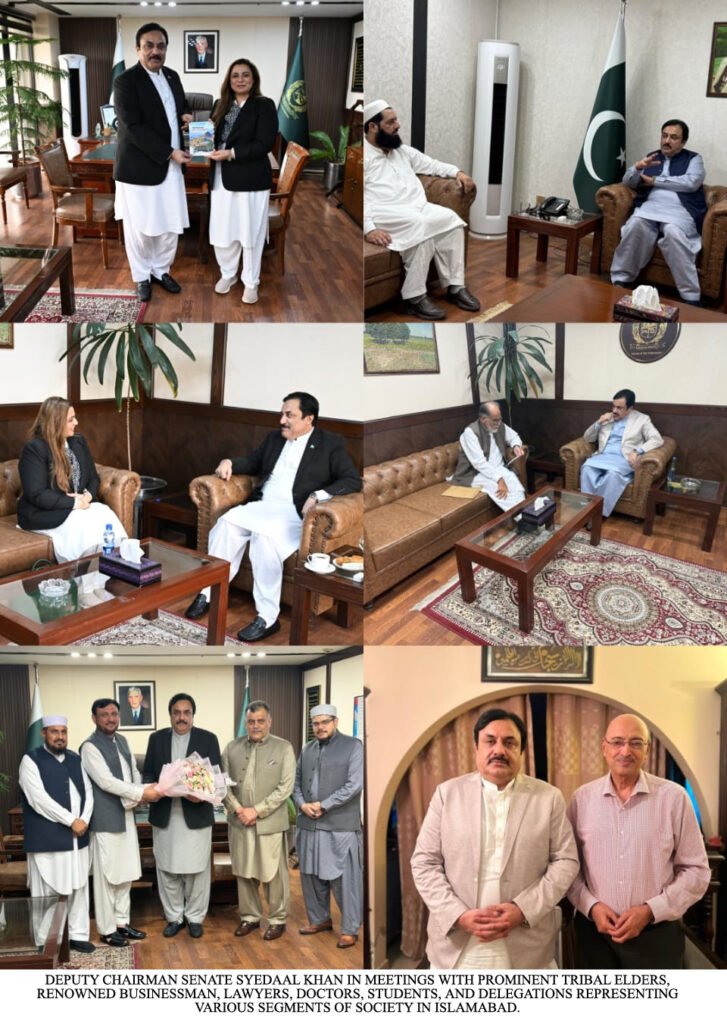
At Parliament House, the Deputy Chairman continued his broad based consultations by holding separate meetings with Balochistan MPA Haji Qadir Mandokhail, former Federal Minister Fawad Chaudhry and his wife, prominent tribal elders, businessman Rehmat ul Salam Khattak, lawyers, doctors, students and representatives of various sectors of society.
The discussions covered a wide range of national issues, including the country’s political and economic landscape, parliamentary legislation, public welfare, health, education, youth development and regional stability. Syedaal Khan Nasar emphasised that the Senate, as the constitutional symbol of the Federation, plays a central role in strengthening trust and harmony among Pakistan’s federating units. He said Parliament’s foremost responsibility is to enact legislation that improves citizens’ lives, strengthens democratic institutions and promotes political and economic stability.
Highlighting the importance of investment in human development, the Deputy Chairman described education and healthcare as the foundations of national progress. He stressed that providing equal opportunities, especially for young people living in underdeveloped regions such as Balochistan, remains critical for achieving balanced and sustainable development.
The meetings also featured discussions on regional and international affairs. The Deputy Chairman reiterated that Pakistan’s foreign policy is based on peace, constructive diplomacy, mutual respect and regional cooperation. He stressed that dialogue, adherence to international law and diplomacy remain the only sustainable means of resolving conflicts and ensuring long term peace. He also reaffirmed Pakistan’s commitment to combating terrorism, strengthening parliamentary diplomacy and promoting international cooperation through peaceful engagement.
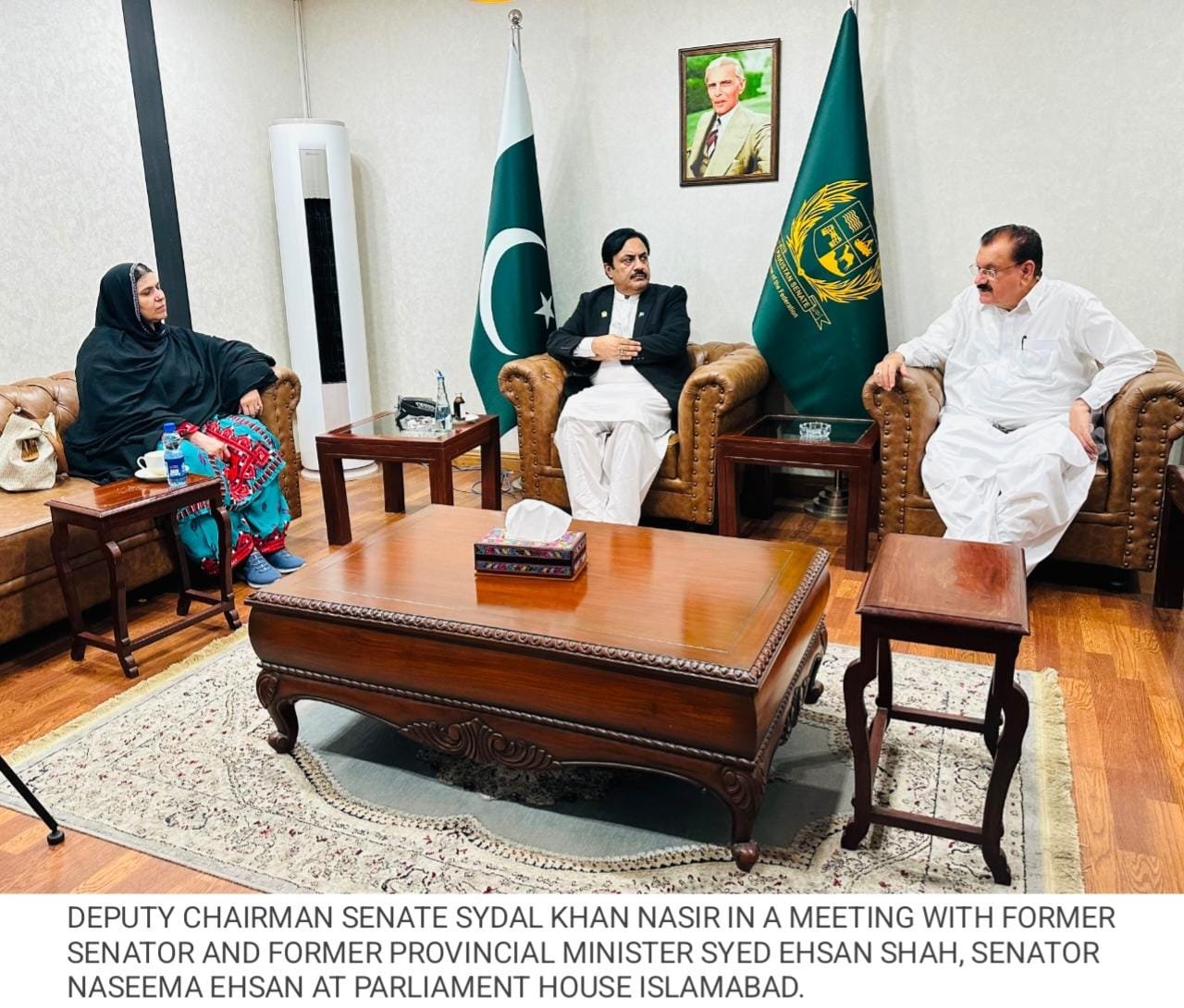
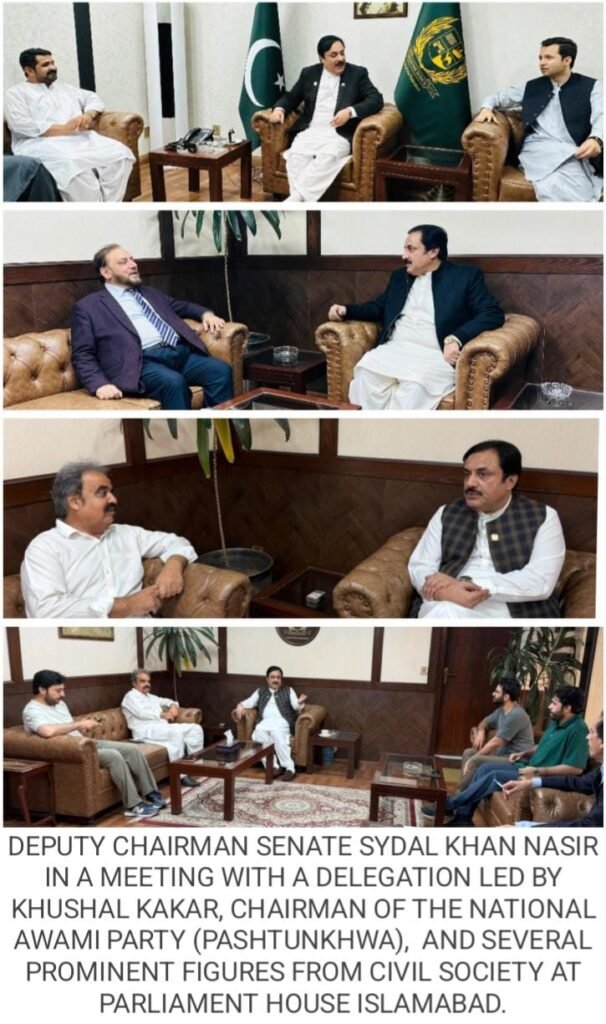
In another round of meetings, Deputy Chairman Senate Syedaal Khan Nasar met Chairman of the National Awami Party (Pakhtunkhwa) and Member of the National Assembly Khushhal Khan Kakar, former Senator Syed Ehsan Shah, Senator Naseema Ehsan, tribal elders and civil society representatives.
The discussions centred on Pakistan’s political, economic and security challenges, with particular attention given to the development of Balochistan. The Deputy Chairman stated that under the leadership of Prime Minister Muhammad Shehbaz Sharif, the Federal Government has placed special emphasis on improving infrastructure, expanding employment opportunities and enhancing public services across the province.
He observed that Balochistan and Khyber Pakhtunkhwa possess enormous natural and mineral resources whose effective utilisation could play a transformative role in Pakistan’s economic future. He reaffirmed his determination to work closely with elected representatives, tribal leadership and civil society to address public concerns, empower young people and promote lasting peace through coordinated efforts with state institutions.
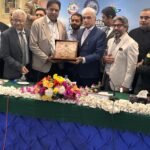
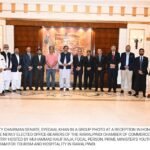
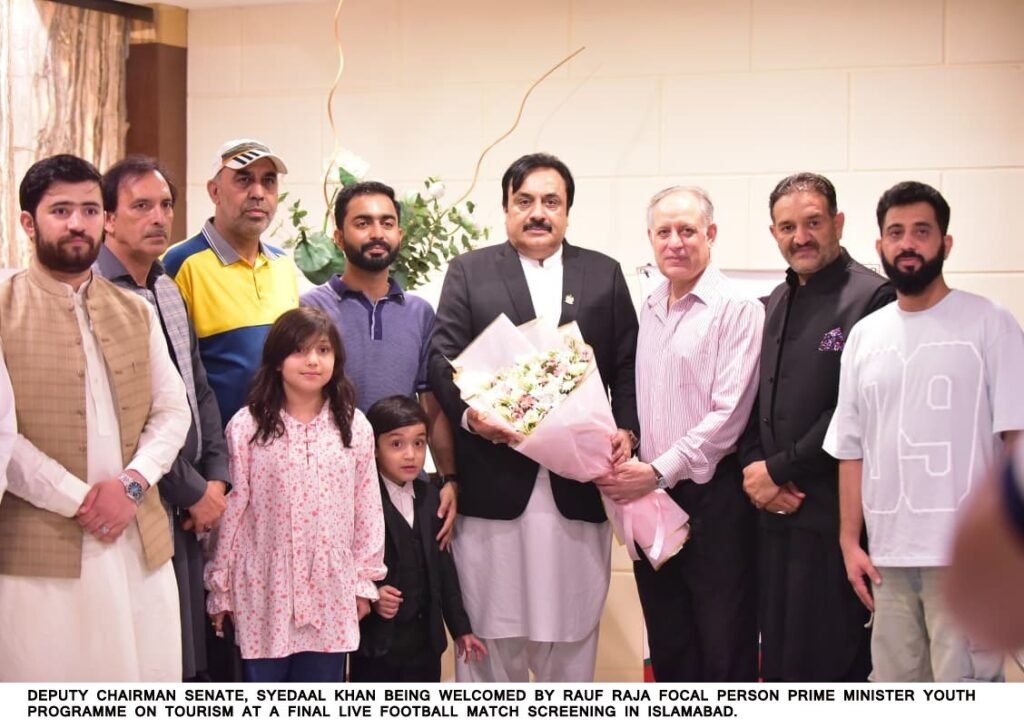
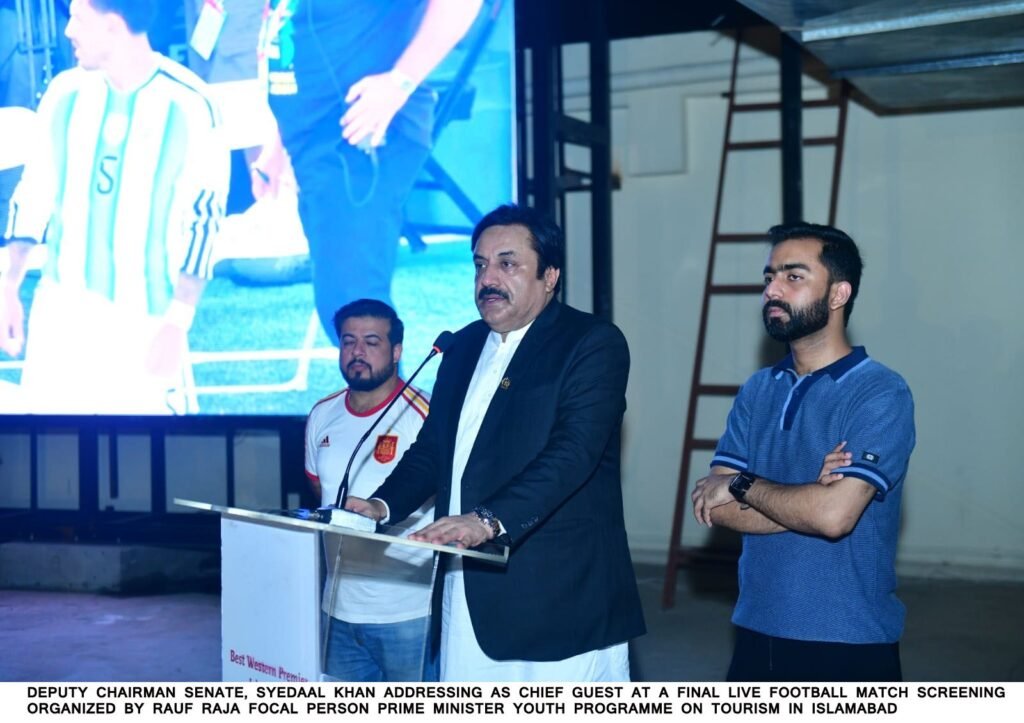
Beyond parliamentary engagements, the Deputy Chairman also underlined the importance of sports as a vehicle for youth development while attending the live screening of an international football final at Best Western Premier Hotel Islamabad as Chief Guest. The event, organised by Muhammad Rauf Raja, Focal Person to the Prime Minister’s Youth Programme on Tourism and Hospitality, brought together diplomats, members of the business community, former international footballers and young leaders.
Addressing the gathering, Syedaal Khan Nasar described sports as a powerful force for promoting national unity, discipline, healthy lifestyles and constructive youth engagement. He particularly highlighted Balochistan’s remarkable football talent, noting that despite limited facilities, the province has consistently produced players who have represented Pakistan with distinction. He called for greater investment in sports infrastructure, coaching academies and grassroots competitions to unlock the full potential of young athletes.
He also praised initiatives that bring together diplomats, businesses and youth through sporting activities, saying such events strengthen people to people connections while projecting a positive image of Pakistan internationally.
Across all his engagements, Deputy Chairman Senate Syedaal Khan Nasar consistently emphasised dialogue, democratic continuity, inclusive development and youth empowerment as the pillars of national progress. His meetings reflected a broad consultative approach aimed at strengthening parliamentary democracy, promoting inter provincial harmony and ensuring that development, education, healthcare and opportunities for young Pakistanis remain at the centre of the national agenda.