
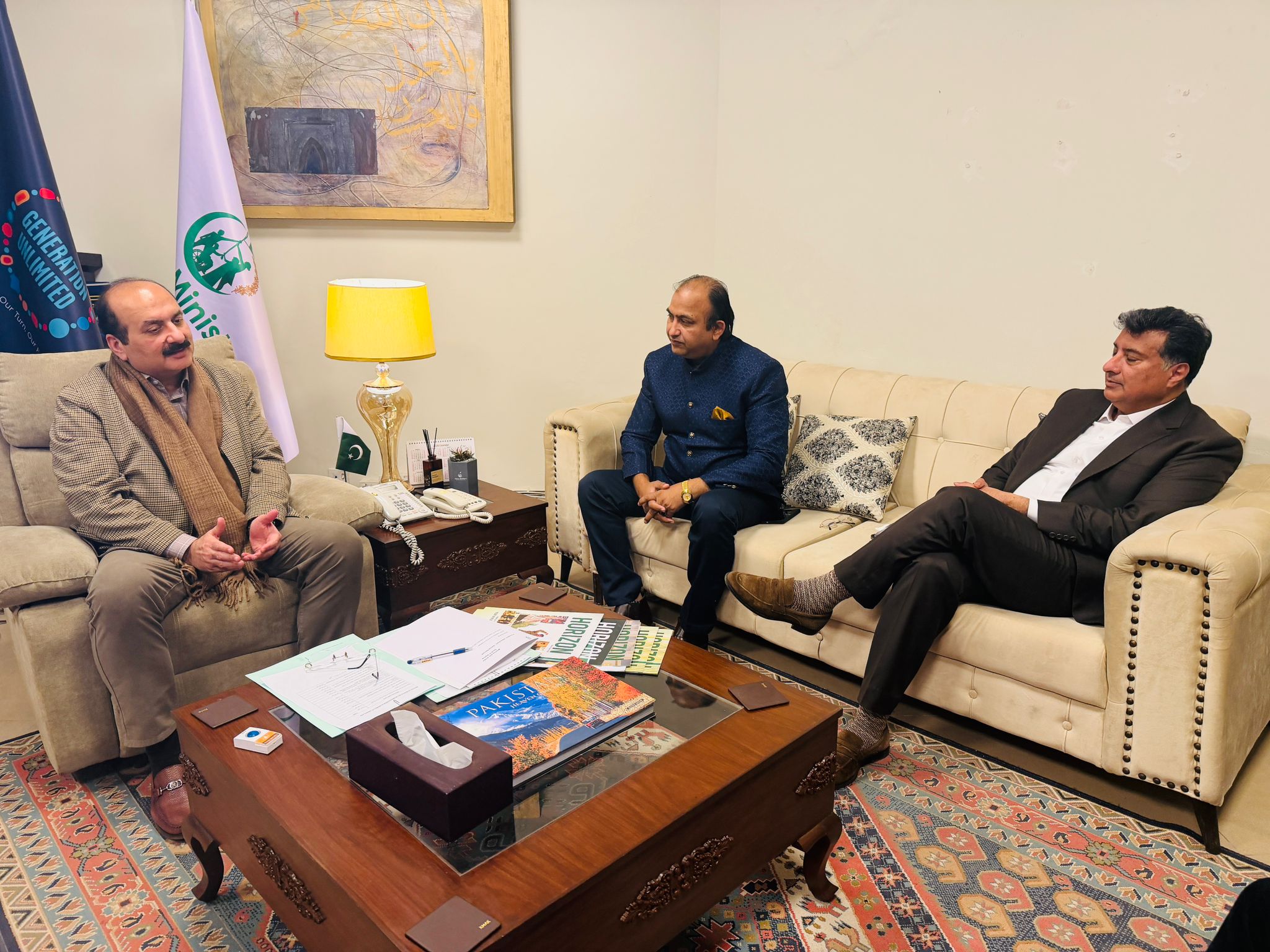
By Irfan Siddiqui | Islamabad
The federal government has unveiled a Rs200 billion Youth Business and Agriculture Loan Program aimed at turning Pakistan’s young population into active drivers of economic growth. Prime Minister’s Adviser on Youth Affairs Rana Mashhood Ahmad Khan, speaking in an exclusive interaction, said the initiative reflects Prime Minister Shehbaz Sharif’s clear vision to shift young people from job seekers to job creators.
According to Rana Mashhood, the financing will be released in phases to ensure transparency, access, and sustainability. “The prime minister believes that Pakistan’s future depends on empowering its youth with real opportunities, not just promises,” he said. “This Rs200 billion package is a practical step to help young Pakistanis start businesses, expand agricultural activity, and contribute directly to national growth.”

Under the Youth Business and Agriculture Loan Scheme, young entrepreneurs will be able to access interest free or low markup loans for startups, small and medium enterprises, and agriculture related projects. The program is designed to support both urban and rural youth, with a special focus on innovation, productivity, and self employment.
Rana Mashhood explained that the loan initiative is part of a broader, integrated youth framework built on five core pillars. The first pillar is national youth policy alignment, under which all federal youth programs have been brought under a single coordinated direction to avoid overlap and ensure measurable outcomes. “For the first time, youth initiatives are being treated as a unified national priority,” he noted.
The second pillar focuses on employment and paid internship programs. These initiatives aim to bridge the gap between education and the job market by providing young graduates with hands on experience in public and private sector institutions. According to Mashhood, this approach is helping young people enter the workforce with confidence and relevant skills.
The third pillar is the promotion of entrepreneurship and startup culture. Alongside the loan scheme, the government is encouraging IT startups, venture capital engagement, and innovation led businesses. Digital platforms and facilitation mechanisms are being developed to make it easier for young founders to access finance and mentorship.
Sports and healthy activities form the fourth pillar of the youth framework. Rana Mashhood said that talent hunt youth sports leagues, sports academies, and sports endowment funds are being expanded to identify grassroots talent and provide structured pathways for young athletes to reach national and international levels.
The fifth pillar focuses on environment and social responsibility. Through initiatives such as the Green Youth Movement and the National Volunteer Corps, young people are being encouraged to take part in environmental protection, community service, and civic engagement. “We want to build a generation that is not only skilled and productive, but also socially responsible,” he said.
Rana Mashhood emphasized that these initiatives are long term investments rather than short term political measures. “Youth confidence is our biggest asset,” he said. “If we equip young Pakistanis with skills, capital, and trust, they will lead the country toward stability, innovation, and sustainable development.”
Government officials believe that the Rs200 billion youth loan program, combined with these five strategic pillars, could significantly reshape Pakistan’s economic and social landscape in the coming years.