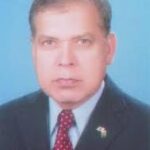
By Syed Nehal Hashmi
Governor Sindh
Pakistan is completing 79 years of its national journey. On the surface, seventy-nine is simply a number, another milestone on the calendar of history. Yet this year, the number carries an unusual and striking symbolism. In the periodic table, 79 is the atomic number of gold.
Gold has always represented value, purity and endurance. But gold is not precious merely because it shines. Its true worth lies in what it must endure before acquiring its purest form. It is subjected to intense heat, melted in the furnace, hammered, moulded and refined. Only after surviving that ordeal does it emerge as something of lasting value.
Pakistan’s journey over the past 79 years has, in many ways, followed a similar course.
That is why the country’s 79th year can appropriately be described as the “Year of Gold”, or perhaps more meaningfully, the year in which a nation tested repeatedly by history must strive to emerge stronger, purer and more resilient.
Pakistan began as a dream, became a reality, passed through trials, accumulated experience and now stands at a decisive point where the lessons of the past must be transformed into the foundations of the future.
Pakistan did not suddenly appear on the map on August 14, 1947. Long before its birth, the idea had taken root in the hearts and minds of the Muslims of the subcontinent. An idea became a demand; the demand grew into a movement; the movement acquired political strength through the Muslim League; and under the extraordinary leadership of Quaid-e-Azam Muhammad Ali Jinnah, it ultimately culminated in the creation of an independent state.
Pakistan was not handed to Jinnah on a silver platter. It was achieved through argument, constitutional struggle, perseverance, political wisdom and remarkable organisational discipline.
Yet the creation of Pakistan was not the conclusion of the story. In many respects, it was only the beginning.
With independence came one of the greatest migrations in modern history. Millions left behind ancestral homes, streets, businesses, farms, neighbourhoods and memories accumulated over generations. They moved towards a country many had never seen, carrying little more than faith in the promise of freedom.
Some travelled with a small trunk containing whatever they could save. Some carried the Holy Quran. Some had a mother’s prayer in their hearts or an old photograph of the home they had left behind. Many possessed virtually nothing except hope.
Not everyone reached Pakistan.
Some perished along the way. Others were forced by circumstances to remain behind. Some could not abandon their ancestral homes. Their feet may never have touched Pakistani soil, but their dreams certainly did. Their hopes became part of the moral inheritance of this country.
Pakistan, therefore, belongs not only to those who reached its borders in 1947. It also carries the dreams of those who could not.
Within this extraordinary chapter of migration lies another story that deserves a more prominent place in our national memory: the role of Sindh.
Sindh did not close its doors to those arriving in search of a new home. It opened them.
Local communities did not merely see the newcomers as refugees or migrants. They saw them as fellow human beings. Homes were shared, food was shared, neighbourhoods were shared and, perhaps most importantly, grief was shared.
In that historic moment, the people who welcomed the newcomers became the Ansar of a new national migration.
It is a chapter that may not have received sufficient attention in our textbooks, but it deserves to remain alive in our collective consciousness. Nations, after all, are not built by territory alone. They are also built when people create room for strangers in their homes and hearts.
This spirit of inclusion is central to the idea of Pakistan itself.
Look at the national flag. We see green and white, a crescent and a star. Yet behind those visible colours lie countless shades of Pakistan’s social and cultural identity. Our Hindu, Christian, Sikh, Parsi, Kalash and other minority communities are not outside the Pakistani story. They are part of it.
Their places of worship, festivals, languages, music, customs and traditions contribute to the cultural mosaic of this country. Pakistan’s strength does not lie in making everyone identical. Its strength lies in bringing different identities together under one flag.
Many colours, one flag. Many identities, one homeland.
Quaid-e-Azam left the nation three simple words: Unity, Faith and Discipline.
They are brief enough to fit on a page, yet large enough to contain the philosophy of national reconstruction.
Unity does not mean uniformity. Faith should never be confused with intolerance. Discipline is not merely about following rules. At the national level, it means character, responsibility, integrity and the willingness to place Pakistan above personal interest.
Seventy-nine years later, however, Pakistan cannot afford to look only backwards. History provides identity, but the future demands preparation.
And Pakistan now stands on the threshold of another great migration.
This time, people are not migrating across geographical borders. Knowledge, technology, capital and economic opportunity are migrating into an entirely new world.
Humanity is moving rapidly from the conventional industrial age into the age of artificial intelligence. Machines are learning. Algorithms are creating. Robots are working. Data is becoming one of the world’s most valuable resources.
For Pakistan, particularly its young people, this raises a fundamental question:
Are we ready?
The Pakistani youth must not enter this new world merely as consumers of technology. They must become its creators.
Do not simply use artificial intelligence. Create with it.
Do not remain merely a customer of technology. Become its architect.
Do not wait for the future. Build it.
Pakistan possesses rivers, fertile land, a vast coastline, mineral resources, agriculture and enormous energy potential. Yet greater than all these resources is one that cannot be extracted from a mine or drilled from beneath the earth: its people.
Pakistan’s greatest natural resource is its human potential.
The emerging global economy will not depend exclusively on resources buried underground. Some of tomorrow’s greatest resources will exist in the cloud, on servers, inside datasets, in algorithms and, above all, within the human mind.
Pakistani youth must not enter this new technological order as subjects. They must enter it as builders.
There is, however, an important distinction that must never be forgotten.
Artificial intelligence can provide intelligence, but it cannot necessarily provide wisdom. It can generate an image but cannot give that image a soul. It can produce words but cannot independently determine which words are morally right. It can calculate possibilities for the future, but the responsibility of deciding what kind of future humanity should build still belongs to human beings.
Learn AI. Understand it. Build it. Use it.
But never outsource your conscience to a machine.
Intelligence without ethics can become dangerous. Knowledge without wisdom can become a burden. And progress without humanity cannot truly be called progress.
As Pakistan moves towards the future, it must therefore carry its heritage with it.
Take Mohenjo-daro into the digital age. Carry Shah Abdul Latif Bhittai into the era of artificial intelligence. Take Iqbal’s philosophy of Khudi into the world of algorithms.
Carry your language with you. Carry your poetry, music and civilisation. Carry your traditions of dignity, hospitality and compassion.
Modernity should never require a nation to surrender its identity. Genuine progress means moving forward without severing the roots that sustain us.
Allama Iqbal expressed this spirit in one of his most enduring verses:
Raise your selfhood to such heights that before every destiny,
God Himself asks you: tell me, what is your desire?
For Pakistan’s young generation, that message is perhaps more relevant today than ever before. Elevate your knowledge, strengthen your character, broaden your vision and set your ambitions so high that the world begins to seek your talent rather than you constantly seeking opportunity elsewhere.
No account of Pakistan’s journey can ignore those who have defended the country and paid the price for its security.
Our soldiers, officers, police personnel, Rangers and countless citizens who confronted terrorism and sacrificed their lives for the country’s peace, sovereignty and security remain an inseparable part of the national story.
Pakistan does not seek war. Pakistan seeks peace.
But sustainable peace also requires strength, preparedness and the ability to protect national sovereignty. The purpose of strength should not be aggression. It should be the protection of a nation’s people, independence and right to live peacefully.
At 79, however, Pakistan must confront a question very different from the one it faced in its early years.
There was once a time when people asked: Will Pakistan survive?
Pakistan survived.
The question today is: What kind of Pakistan will it become?
Will we spend our lives merely remembering the past, or will we also build the future?
Will we simply use technology, or will we create it?
Will we wait for opportunities, or will we generate them?
Will we fear the future, or will we shape it?
This brings us back to the symbolism of 79.
Gold teaches us that purity comes through fire. Pakistan, too, has passed through the fires of history. Political crises, wars, terrorism, economic difficulties, natural disasters and social divisions have repeatedly tested the country.
The next stage must be one of refinement.
Politics must be refined through public service. Institutions through merit. The economy through hard work and productivity. Education through quality. Youth through knowledge. Technology through ethics. Power through responsibility. And national character through humanity.
Pakistan must become gold not in wealth alone, but in character.
We owe a debt to those who created Pakistan. We owe a debt to those who migrated for it. We owe a debt to the communities that opened their homes to the displaced. We owe a debt to those who dreamed of Pakistan but never reached it. We owe a debt to our martyrs and defenders.
But perhaps our greatest debt is to the children who will inherit this country tomorrow.
It will not be enough to hand them a flag. We must hand them a better country.
The world they inherit will be dramatically different from ours. Jobs will change. Machines will change. Professions will disappear and new ones will emerge. Technology will redefine the boundaries of human possibility.
Yet some things must never change:
Truth. Integrity. Compassion. Courage. Faith. Discipline. Respect. And love for Pakistan.
Pakistan began as a dream. It became a homeland. The homeland became a responsibility. Now it must become an opportunity: for every child, every student, every woman, every farmer, every worker, every scientist, every artist, every soldier and every citizen.
Seventy-nine years later, Pakistan’s journey is far from over.
In fact, Pakistan is still being built.
And perhaps that is our greatest source of hope.
Our story has not been completed. Our destination has not been written. The pen is now in our hands.
That is the deeper meaning of the Year of Gold.
Let us build a Pakistan that is pure in character, strong as steel in adversity, enlightened by knowledge, radiant in achievement and humble in power.
May its green remain forever vibrant. May its white always represent peace and tolerance. May its crescent illuminate the future and its star continue to guide us towards knowledge, justice and progress.
And may the prayer of Ahmad Nadeem Qasmi one day become the lived reality of this land: may a spring descend upon our beloved Pakistan that carries within it no fear of decline.
Pakistan Zindabad.
Pakistan Paindabad.